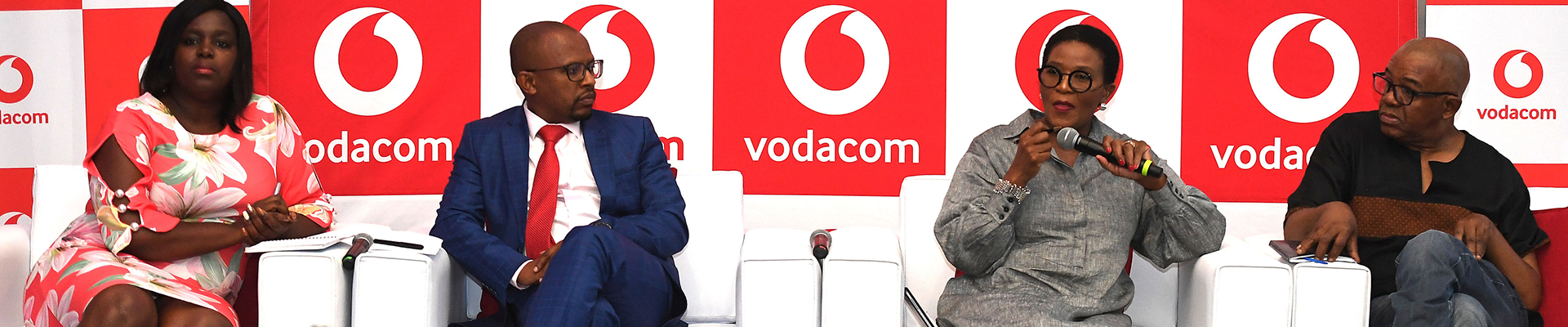
Vodacom Group is stepping up its efforts to make digital services more accessible to Deaf and hard-of-hearing people across its African footprint, as it works to remove communication barriers that can prevent people from accessing essential and financial services, and customer support.
The focus coincides with International Week of Deaf People, taking place from 21–27 September 2026, under the theme "Declaring Deaf People's Human Rights", bringing renewed attention to equal access, participation and inclusion for Deaf communities.
For Vodacom, accessibility is part of a bigger ambition that ensures that Africa's digital transformation includes as many people as possible. Vodacom has been in dialogue with the Africa Union (AU) to ensure that sign language users on the continent are not left behind. In partnership with the AU, Member States are called to strengthen legislative policy to promote accessibility, inclusive communication, and the full and meaningful participation of persons with hearing Disabilities. Member States are also encouraged to recognise and promote national sign language(s) as official or legally recognised language(s), in accordance with national constitutional, legal, and policy frameworks.
"Africa's digital transformation cannot be regarded as inclusive if people still encounter barriers when they try to use the services that are increasingly shaping everyday life," says Ayman Essam, Chief External Affairs Officer, Vodacom Group. "Our purpose to connect for a better future is not just about who has connectivity, but whether people can meaningfully use it. Accessibility must be part of that conversation from the beginning."
Vodacom Group is already translating this approach into practical initiatives across all eight of its operating markets on the continent. In South Africa, Vodacom operates a Relay Contact Centre with agents who communicate in South African Sign Language (SASL), while its free Vodacom 112 Emergency Service App enables customers with communication barriers to communicate with the ER24 Emergency Services Contact Centre and access ambulance, police, fire, traffic and sea rescue services.
"I have the Vodacom's emergency app on my phone which gives me great peace of mind should I require an emergency service", says Vodacom customer Mr. Fanie du Toit.
In Kenya, through Safaricom, the company has partnered with Signs Media Kenya to integrate the assistALL Mini-App into the M-PESA App, providing on-demand sign-language interpretation. Vodacom Tanzania operates a contact centre with agents who can assist customers using sign language, while Vodafone Egypt provides dedicated solutions for Deaf and hard-of-hearing customers, including a prepaid plan and sign-language customer service.
"Accessibility is really about designing technology and services that respond to different needs," says Dr Karen Smit, Accessibility Lead at Vodacom. "Whether someone is trying to contact emergency services, manage their money or get customer support, communication barriers should not prevent them from accessing the services they need. When accessibility is considered from the start, technology can enable greater independence, participation and inclusion."
Vodacom has also embedded accessibility within its workplace. In South Africa, it has enabled an SASL font across Microsoft 365 and launched a 12-module SASL learning pathway developed with Deaf educators and the National Institute for the Deaf. "As Vodacom, we advocate for schools on the continent and around the world to teach sign language as a mandatory part of the curriculum", adds Essam.
Vodacom Group will continue the conversation on intentionally driving efforts to make digital services more accessible at its annual Accessibility Conference on 9 November 2026 in Cairo, Egypt, advancing dialogue around accessibility and inclusive technology.
"For us, connecting for a better future means technology breaking down barriers, which enables many more people to participate in the digital world. Accessibility is what makes this future a reality," Essam concludes.